The Renaissance Innovator

Thoughts, examples and updates on the Renaissance Innovation Method

Fast Enough to Catch up with Fashion

Posted on April 23, 2011


Some of you may have heard of  Fast Fashion, the practice of quickly bringing  designs from the runway to stores. This strategy helped upstarts like ZARA, supplant some of the most-established leaders of apparel retail. The strategy has now been emulated by many others like UniqloH&MForever 21, etc.  Today, the strategy is recognized as being more responsive to customer trends, but it is often derided for its inefficiency.  When ZARA started out many practitioners were puzzled by many counter-intuitive choices in the design of this business model– production in high cost locations, super expensive air freight and logistics, limited sales, etc.  As a consequence of all these expenses, practitioners expected  ZARA’s products would have to be much more expensive than traditional retailers to cover the  high production and logistics costs.  But as anyone who has been to a ZARA store knows, its products are actually  more affordable than those sold in department stores.  How could ZARA pull this off? At the heart of Fast Fashion lies the same risk-return trade-off that drives each of the other renaissance innovations that we have talked about.

On-demand call centers in the house next to you

Posted on April 17, 2011


When disaster in Haiti happened, lots of people around the world wanted to help through donations. But who can organize a huge call center to accept donations on a one-day notice and dismiss it after a week or so? This task was taken on by LiveOps, a contact center company based in San Francisco.  Although you probably have never heard about the company, it might have serviced some of your calls to order a pizza, for instance. So what allowed LiveOps to handle this enormous task of establishing an overnight call center? The answer is: a novel approach to labor management which places LiveOps in the prominent company of renaissance innovators.

Zipcar Zips Ahead on First Day of Trading

Posted on April 16, 2011


Some of you might have read about the recent IPO of the car rental company Zipcar. On Thursday April 14th, zipcar car shares surged 56% on the first day of trading after an expanded initial public offering. This values the car rental company at US$1.21 Billion, at 6.5 times last years sales, more than seven times higher than the multiple of 0.9 for its competitor, Hertz!

So why do the markets love Zipcar so much more than Hertz?  How does a company shake-up a staid, boring industry like car rentals and be valued at multiples more akin of much higher growth industries? You guessed it– by  identifying a renaissance innovation!

From a Dorm Room to US$14.6 Billion

Posted on April 16, 2011


In the early 80’s a pre-med student at the University of Texas at Austin, by the name of Michael Dell started an informal business upgrading computers in his dorm.  By 2011, this business catapulted his net worth to  US$14.6 Billion. More interestingly, this student did not invent any new computer technology, did not attack any new market; yet he completely revolutionized the computer industry, essentially driving mega-corporations like IBM out of the business. At the root of this was a new operating model, a renaissance innovation

Making the World a Better Place

Posted on April 8, 2011


Getting drivers to switch from gasoline cars to eco-friendly electric vehicles has long been a goal of policy-makers and governments. But all attempts at attacking the mass market have largely failed. Despite rapid advances in battery technology, electric vehicle’s limited driving range and high up-front costs have all held back mass adoption.

Some companies like Tesla Motors, have invested heavily in improving electric vehicle technology, but have not met with much success. But one company,  Better Place took a different route and has the best chance in a generation at mass-adoption of electric vehicles. Rather than invest in technological innovation, it decided to take a decidedly different route, innovating the operating model around electric vehicles– the renaissance innovation route.

Blockbuster: the unlikely innovator

Posted on April 7, 2011


It really pains me to see “going out of business” sign on Blockbuster stores across the USA. Most of us know Blockbuster as a sore looser in the video-rental battle to newcomers such as Netflix, RedBox and Video on Demand. Few, however, know that in 1997 Blockbuster was responsible for one of the greatest renaissance innovations which revolutionized entire industry and propelled Blockbuster to be an undisputed industry leader.

How do you manufacture profitably in San Francisco?

Posted on April 3, 2011


The conventional wisdom seems to be that all manufacturing is moving to third-world countries, right?  Maybe if you follow conventional wisdom but renaissance innovators may think otherwise. Timbuk2.com, a San Francisco startup (well, it used to be in mid-90s, it is pretty big now) proves this rule wrong by having a highly successful manufacturing business right in down-town of the most expensive US city. How do they do this?

Power-by-the-hour and after-sales market

Posted on March 31, 2011


Equipment one encounters in the aerospace industry is very complex: think about an aircraft engine.  It is, in fact, so complex that airlines usually have a separate agreement with the engine maintenance provider, often the same company that manufactures the engines.  We are probably all familiar with repair and maintenance services through the car dealership: they will charge you for parts AND labor, and you can rarely tell upfront how much. So about 30 years ago Rolls-Royce came up with an innovative customer proposition: provide exact same service for exact same products, but charge customers per flying hour of the engine.  Why is this different enough to be liked by many customers?  And why is this attractive enough to inspire entire US Department of Defense to source all services this way?

Pick Your Furniture…

Posted on March 29, 2011


Around three  years back, a group of Paris based entrepreneurs started MyFab, an internet furniture retailer that is doing more to change the industry than any other company since IKEA.  MyFab’s products are very similar to those of its competitors (often identical), and the markets it is reaching out to (western Europe and the US) have  been saturated with many creative designers and efficient producers …

So how is MyFab revolutionizing the industry? What is the secret of its success?

Welcome!

Posted on March 23, 2011


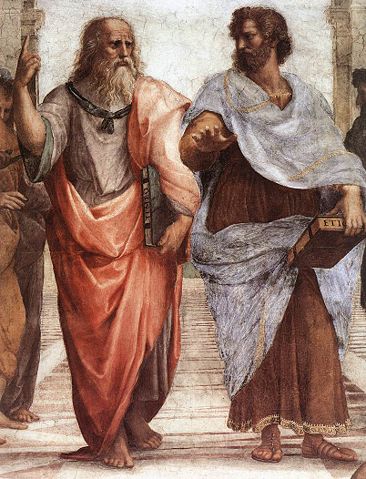
Aristotle and Plato

Hey! Welcome to our blog on Renaissance Innovation. Here we plan to share our latest research, case studies and thoughts on ideas that disrupt industries, revolutionize the business landscape, and generate immense wealth– all by selling exactly the same products as competitors to the same customers, but by reinventing the operating model of the industry. We call such ideas, and the process of identifying, generating and refining them the The Renaissance Innovation Method, or simply Renaissance Innovation.

Who is a Renaissance Innovator?
Why call it Renaissance?