The Renaissance Innovator

Thoughts, examples and updates on the Renaissance Innovation Method

Is there such thing as fair price?

Posted on January 31, 2012


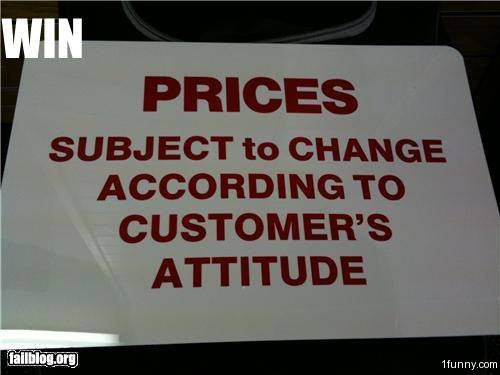
  Among Renaissance Innovations that dramatically changed airline industries around the world is dynamic pricing.  Now we take for granted that a person sitting next to you on the plane might have paid a fraction of what you paid.  However, it was not always this way.  Only about 30 years ago, for instance, US airline industry was heavily regulated with almost no price fluctuations.  But then the industry was deregulated and the airlines became free to set any prices they like. Like it was the case with some other innovations, dynamic pricing was born out of necessity: major legacy airlines were under intense pressure to compete with low-cost carriers which were undercutting them on prices. However, the casualty of that battle was not the legacy airlines, and all because of a Renaissance Innovation.

The Renaissance Innovator joins the INSEAD bloggers network!

Posted on January 22, 2012


From today, our blog, The Renaissance Innovator, is part of the official INSEAD bloggers network. So if you arrived here through the INSEAD blog, Welcome to our blog and read on for what this blog is about. For our loyal regular readers, nothing changes, you can read our blog posts exactly as you did before, and  we’d also recommend checking out some of the other excellent posts on the INSEAD blog.

I often open my industry engagements on innovation with a simple thought experiment for our participants — I  ask them to think of the most innovative organizations and identify what exactly they did that made them so innovative. The answers we hear are very predictable– no matter if we pose this question to a diverse group of MBA students or to a group of very senior managers from a single company, or to leaders from the non-profit world. Irrespective of the background of the audience or the setting, a majority of our participants identify the inimitable products to have come out of the Apple stable, small but substantial groups highlight the technological advances in biotechnology, information technology (including household names such as Google and Facebook) and the rapid advances in medicine. To us, it is not the product, technology or market innovations on the list that are most notable, but the innovations that the participants invariably leave off the list.  Consistently, our participants leave out a breed of innovators; innovators that bring existing products to satisfy existing needs but use innovative business models to do so.

Changing the Way People Give…

Posted on January 9, 2012


The world is full of problems– poverty, malnutrition,  medical access,  climate change, natural disasters, etc. It is also full of many tenacious do-gooders  with solutions,  and thankfully many generous souls who would like to financially support  these do-gooders.  Unfortunately,  the “marketplace”   that  matches the do-gooders with solutions is what economists would call very inefficient, that is many matches that are in the interest of  everyone involved are not made. GlobalGivingGiveIndia and a new breed of startup donation platforms are attacking these inefficiencies with a new business model for charitable giving and forever changing the way people give. More  interestingly, how can we apply some of the renaissance innovation techniques that we talk about on this blog to take giving to the next level? Read on for some game-changing ideas…

To focus or not to focus (on patients, that is)?

Posted on January 4, 2012


As I am preparing for a teaching session in a couple of weeks in Moscow, I realized that we had not written about one of the older but even more relevant today innovation.  Some months back I blogged about a very cool startup Diapers.com which was founded by my former students in 2005 and which was recently acquired by Amazon.com. The company created an impressive business model by focusing on a very narrow segment of the market and by eliminating lots of risks/uncertainties associated with diversification.  As it turns out, the same concept can and has been applied to services, and not just any services: to healthcare.  Given all the recent buzz about high costs and poor quality of healthcare in the USA, it is fascinating that somewhere very close (in Canada) there exists a hospital which is much closer to a country club than to what we usually expect to see in healthcare. The hospital is called Shouldice Inc. and, although the case that I teach about it dates back 20 years, the company is very much alive and well, and it still provides much higher quality of care, better experience and faster recovery while requiring fewer doctors and nurses and much cheaper facilities than any competitor.  How is this possible?  This is yet another clean example of the Renaissance Innovation.

A New Model for Gifts!

Posted on December 24, 2011


Christmas is in the air and I am sure many of you have been buying gifts for your loved ones.  Not to be the Grinch– but there is strong empirical evidence  that shows that gift-giving destroys a third of gift value. Gift-receivers on average, value  gifts a third less than what the gift giver paid for it!   Essentially, gifts are really inefficient ways to show you care.  But, a startup conceived and developed in one of our classes on renaissance innovation has an elegant solution to offer.

Operational Analysis for Business Model Diagnosis…

Posted on December 17, 2011


I spent the better part of the last 6 weeks in the classroom with our incredibly talented MBA participants here at INSEAD. I was assigned to teach a class on  operations management, but we took a slightly different take on the subject, a renaissance innovation take. A traditional MBA class on operations builds basic tools of  process analysis, inventory  and supply chain management in the context of managing a firm’s sourcing, production and distribution. In our newly developed operations class at INSEAD, we take the same basic analytical principles but we learn and  apply them in an entirely different context– to help us analyze, diagnose and reinvent the business models of firms. In our work with numerous companies on helping them innovate their business model, we have come to realize that such a scientific analysis and diagnosis of existing business models is a key first step to innovating a firm’s business model. Let me explain…

Retail innovations for the 21st century

Posted on December 4, 2011


A few related things happened this week which all prompted me to write about retail innovations.  First, a startup company I am advising, Objective Logistics, has received a round of funding from Google Ventures and Atlas Ventures.  I had written about what they do in this blog already and, needless to say, securing funding from these widely respected venture capital firms is exciting.  Of course, the media picked up the news and you can read details at ReadWriteWebMashable, Boston Herald, Xconomy and many others. Second, I gave a long interview to the Economist where I talked about some retail innovations out there.  Of course, what actually appeared in the journal was just one sentence so I figured I can expand upon what I actually said here. Third, Harvard Business Review asked me to contribute to their blog project on the 21st century retail so I thought I can practice here first (update: here is my HBR blog post).  Casual glance at this web site makes it evident that many, if not most, retail innovations seem to be around products, store design, technological innovations etc. But here is a different take on retail innovation.

Renaissance Innovation and startups

Posted on November 20, 2011


In this blog we discussed Renaissance Innovations of many companies, small and big, old and new.  Some of the startups we have already covered are Diapers.com, Objective Logistics, Amazon.com and many others. I hope that our blog makes it quite clear that the ideas of Renaissance Innovation method apply equally to startups and established companies.  However, in this post I wanted to focus just on startups.  The approach that is gaining a lot of momentum and good publicity is called “The Lean Startup“, most recently the new book debuted as #2 on the New York Times bestseller list. On the surface, this sounds like doing something on the cheap. These who know something about operations management will also recognize that “lean” is synonymous with Toyota Production System which has little, if anything, to do with startups.  However, after reading the book I was struck by how much The Lean Startup approach is consistent with the Renaissance Innovation ideology.

Renaissance Innovation @ The World Knowledge Forum

Posted on October 19, 2011


Last, week I had the opportunity to speak on Renaissance Innovation at the World  Knowledge Forum, 2011 in Seoul, Korea. The event was very well attended with  many interesting speakers, from government, (Sarah Palin, Gordon Brown, Seiji Maehara), academics (Larry Summers, Nouriel Roubini) and business (Tom Albanese, Nishida Atsutoshi). For me,  there were three  interesting observations. First, how innovation has come to completely dominate the policy and business agenda. Second, how little we know about how to actually become innovative and third, how innovation translates across borders. Let me elaborate.

How to innovate the most boring industry ever

Posted on September 27, 2011


  OK, so here is a mind-bender for people with good imagination: how to innovate the most boring industry ever? Evidently, I am talking about sea transportation. As global trade keeps growing, ships keep transporting goods from China to Europe and to North America. The process is as simple as it gets: put stuff on the ship, sail for 20-40 days and get stuff off the ship.  There are, of course, hiccups.  There is bad weather, ship breakdowns, customs delays and, most recently, pirates. And there is certainly not much innovative one can offer here which does not break the rules of physics: faster ships? Teleportation? Lighter cargo? None of this is entirely realistic. And yet one company is doing it.  As other renaissance innovators, it is not changing the basic product (it is still transportation of containers) or technology (it is still the same engine-powered ships). Yet, what the company is about to launch will, I believe, change the entire industry forever.